
- B-2/5 Safdarjung Enclave, New Delhi-110029
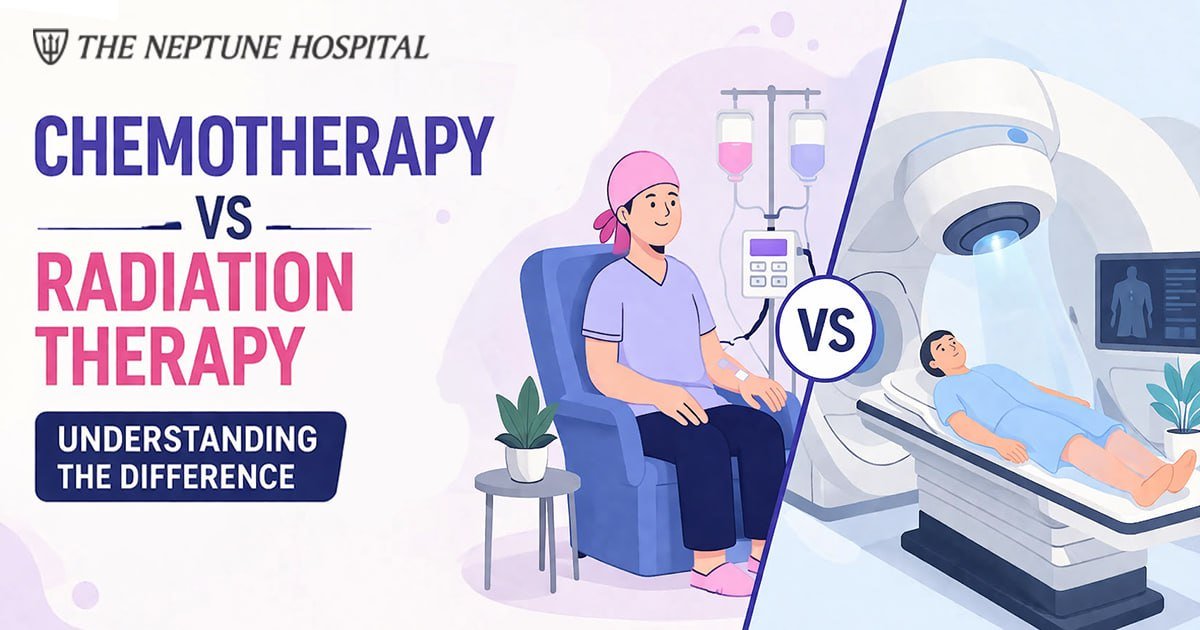
Chemotherapy vs Radiation Therapy: Understanding the Difference
Cancer patients have many questions when they are given the news, and one of the most asked questions is regarding treatment options. Many patients and their families get confused when their doctors discuss chemotherapy and radiation therapy. Both treatments are designed to kill cancer cells, but in different ways. Understanding this difference makes patients feel secure and confident. At Neptune Hospital, which provides the best Chemotherapy Treatment in Delhi, doctors explain chemotherapy and radiation therapy to their patients in detail, explaining what each treatment does and how it can help.
What Is Chemotherapy?
Chemotherapy is a drug-based treatment that circulates in the bloodstream throughout the body. It works by killing rapidly growing cancer cells wherever they are in the body. This makes chemotherapy an effective way to treat cancers that may have spread to multiple areas in the body.
Chemotherapy may be given through injections, IV drips, or oral medications, depending on the type and stage of cancer. Chemotherapy may be given before surgery to reduce the tumour, after surgery to reduce the chance of cancer returning, or as the main treatment when surgery is not an option.
Chemotherapy patients may be worried about the potential for side effects, such as tiredness, nausea, or hair loss. Fortunately, advances in chemotherapy medications have made treatments much more comfortable. The chemotherapy team at Neptune Hospital works hard to develop individual treatment plans that are effective and easy to tolerate.
What Is Radiation Therapy?
However, unlike medication, which travels through the bloodstream to reach the target area, in the case of radiation, high-energy rays are directed at a particular area in the body. The aim is to impair the cancer cells to the point where they are unable to multiply or grow.
This form of treatment is very precise and mainly affects the target area. For instance, it may be required for breast cancer, prostate cancer, or brain cancer (tumour), among others. This form of treatment is short and painless, although the sessions may be many and spread out over a period of time.
Radiation may be required when the cancer in the body is localised or when there is a need to reduce the tumour’s size without affecting the rest of the body.
Key Differences Patients Should Know
Understanding the practical differences can make treatment decisions easier:
Area of Treatment:
Chemotherapy treats the whole body, while radiation targets a specific location.
Method:
Chemotherapy uses drugs; radiation uses energy beams.
Purpose:
Chemotherapy helps control or eliminate widespread cancer cells, whereas radiation focuses on destroying a defined tumour.
Side Effects:
Chemotherapy may cause systemic side effects, while radiation side effects are usually limited to the treated area.
Doctors sometimes combine both treatments for better results. This combined approach can improve outcomes depending on cancer type and stage.
Which Treatment Is Right for You?
There is no such universal answer to this question. The treatment depends on a variety of factors, such as the type of cancer, the stage of cancer, the health condition of the patient, and the objectives of the treatment. Some cancer patients need chemotherapy first, and some need radiation therapy first.
Consultation is the best way to eliminate confusion and uncertainty. At Neptune Hospital, which is famous for Chemotherapy Treatment in Delhi, the oncologists describe the options in a clear and simple manner so that the patient and family can make the right decision without fear and confusion.
Managing Fear and Expectations
One of the biggest challenges patients face is anxiety about treatment. Understanding what to expect reduces stress significantly. Patients are encouraged to ask questions, discuss side effects openly, and seek emotional support during therapy.
Supportive care, nutrition guidance, and regular monitoring play an important role in recovery. The care teams at Neptune Hospital emphasise both medical treatment and emotional wellbeing, helping patients stay strong throughout their cancer journey.
Conclusion
Chemotherapy and radiation therapy are not alternative treatments, but complementary therapies in cancer treatment. They serve a unique purpose, and their choice depends on individual medical needs. Patients who are aware of the differences between chemotherapy and radiation therapy feel empowered and less confused.
With adequate medical guidance, communication, and care, cancer treatment is a journey and not a walk in the dark. Awareness of treatment options is a stepping stone to recovery and hope.
All Blogs
- ⇒ Joint Pain That Won't Go Away, Here's When You Need an Orthopedic Specialist
- ⇒ How Healthy Are Your Lungs? 12 Warning Signs You Shouldn't Ignore
- ⇒ 10 Common Skin Problems During the Monsoon and How to Prevent Them
- ⇒ Managing Respiratory Allergies in Rainy Season
- ⇒ Chemotherapy Myths and Facts Every Family Should Know
- ⇒ Chemotherapy vs Radiation Therapy: Understanding the Difference
- ⇒ Best Winter Exercises for Strong Bones & Healthy Joints
- ⇒ Top 5 Mistakes to Avoid When Choosing the Best Maternity and Gynaecology Hospital in Delhi
- ⇒ Why Women’s Health Needs Special Attention at Every Stage of Life
- ⇒ How Stress Affects Your Gynecological Health and Ways to Cope
- ⇒ What Is Polycystic Ovary Syndrome (PCOS) and How Can a Gynecologist Help?
- ⇒ Your First Gynecologist Visit What to Expect and How to Prepare
- ⇒ The Silent Struggle | Understanding and Treating Muscle and Joint Pain